

On Friday, October 16, 2026, the case involving Samuel Kamau Waweru has returned to public attention following remarks by lawyer Brian Thuranira, highlighting the Office of the Data Protection Commissioner’s (ODPC) findings against the lending company.
The dispute began when Kamau complained about unwanted calls and messages advertising Platinum Credit loans despite having no business relationship with the company.
How Platinum Credit landed in trouble
According to ODPC Complaint No. 1951 of 2024, Kamau filed his complaint on November 27, 2024, after receiving repeated promotional calls and messages.
During a phone call on November 18, 2024, a woman marketing Platinum Credit’s loan products demonstrated knowledge of his personal identification information and vehicle details.

Page 1 of ODPC on Samuel Kamau. Photo/https://web.facebook.com/profile.php?id=100010852129164
Kamau maintained that he had never applied for a loan from Platinum Credit or authorised the company to use his private information.
Platinum Credit denied that the woman was its authorised representative.
However, the ODPC investigation linked the marketing activities to the company’s sales operations and found that Kamau’s personal information had been used without his permission.
In its February 24, 2025 determination, the regulator found Platinum Credit liable for unlawful processing of personal information.
“The Respondent is hereby found liable,” the determination stated.
The Data Commissioner initially ordered the company to pay Kamau Ksh400,000 and issued an enforcement notice.
The regulator also recommended the prosecution of the company’s directors for providing information it considered false or misleading during the investigation.
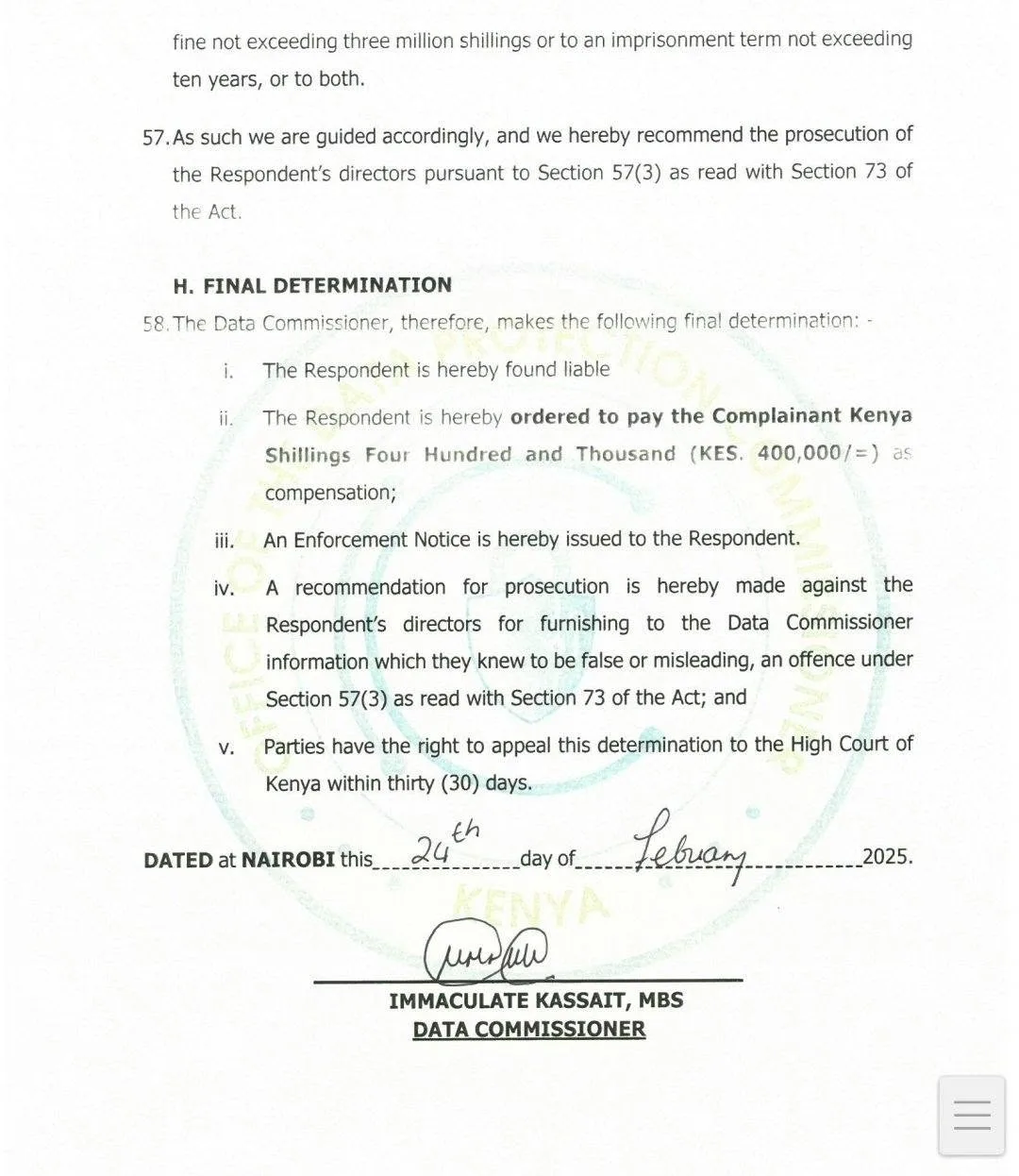
Page 1 of ODPC on Samuel Kamau. Photo/https://web.facebook.com/profile.php?id=100010852129164
Why Kenyans fear Platinum Credit
Beyond the privacy dispute, Platinum Credit’s published loan terms raise serious questions about the cost of borrowing, the additional charges customers face and the pressure that can arise when repayments fall behind.
According to the company’s official terms and conditions, some loan products carry monthly interest rates of 15 per cent, while certain overdue balances attract additional charges of 0.33 per cent per day.
Also, Platinum Credit lists guarantors and their identification documents among the requirements for some business loans.
This raises an important concern for borrowers and their families: what happens when lenders contact guarantors over unpaid loans?
While contacting a properly authorised guarantor can be part of lawful debt recovery, using someone’s private information without a lawful basis or subjecting them to harassment raises data protection concerns.
Platinum Credit’s published conditions also allow it to engage third-party debt collectors and recover certain collection costs from borrowers.
The concerns surrounding loan marketing are especially serious for Kenyans who have never requested a loan but find their personal information in lenders’ hands.