
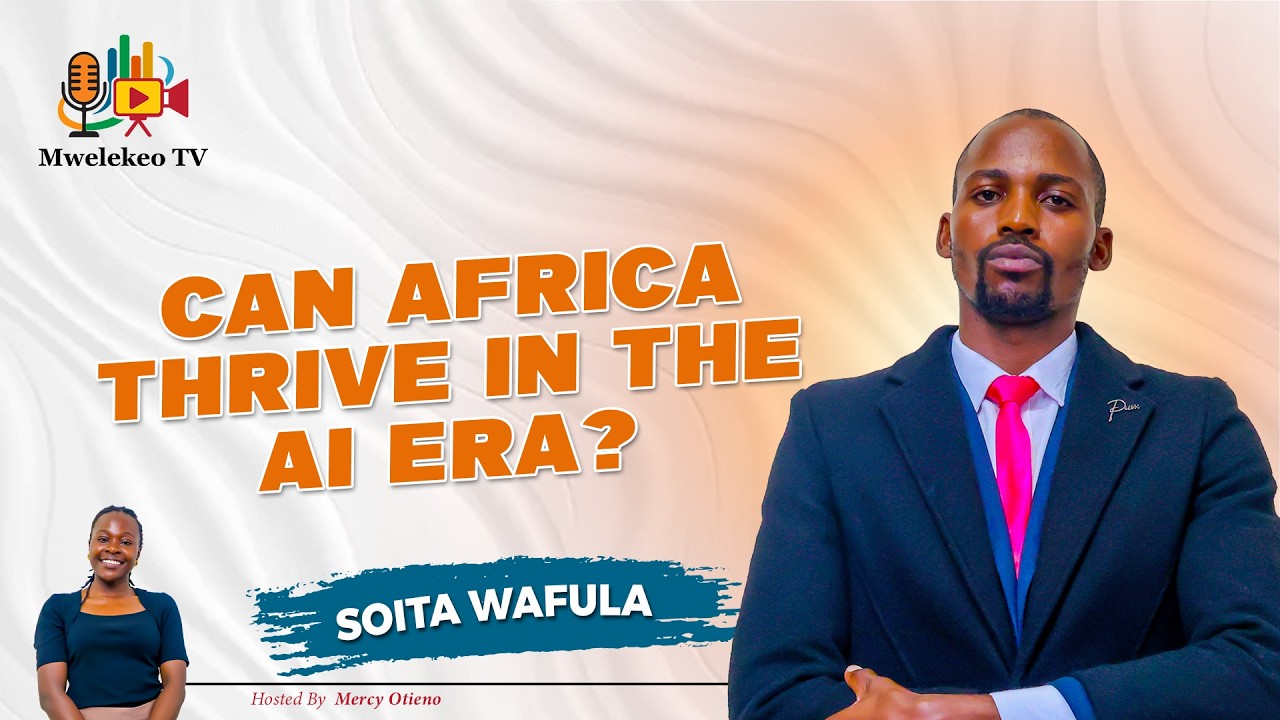
A powerful conversation on Mwelekeo TV is sparking debate online after entrepreneur and system thinker Soita Wafula delivered a bold warning about Africa’s future in the age of artificial intelligence.
Speaking to host Mercy Otieno, Wafula argued that the biggest threat facing African workers is not AI itself, but the growing gap between people who embrace technology and those who ignore it.
“AI will not replace people. People using AI will replace those who refuse to adapt,” Wafula said during the eye-opening discussion.
The interview explored how Africa risks remaining a consumer of innovation from the West and East instead of becoming a creator of solutions designed for local challenges. Wafula noted that despite the continent’s massive agricultural potential, Africa still imports nearly 85 percent of its food, something he believes AI-driven innovation could help change.
He pointed to sectors such as agriculture, fintech, and education as areas where African innovators should urgently focus their energy.
Wafula also challenged the current education system, saying many schools are still preparing learners for exams instead of real-world problem solving. According to him, the future belongs to young people who can think critically, communicate effectively, and solve complex problems using technology.
During the interview, he outlined four essential skills young Africans must master to survive in the AI era: problem solving, conflict resolution, communication, and strategic decision-making.
The conversation also touched on Africa’s growing infrastructure challenge, with Wafula warning that the continent still depends heavily on foreign-owned data centers and digital systems. He stressed the need for local investment in energy and technology infrastructure if Africa hopes to achieve true AI sovereignty.
Despite the concerns, Wafula remained optimistic about the future, predicting that Kenya could emerge as a global innovation hub by 2035 if young people take action now.
He concluded with a message that has since attracted attention across social media platforms: “We cannot wait for leaders to wake up. We must wake up and build it ourselves.”