
Two cases involving KCB Bank Kenya have recently attracted public attention for very different reasons, but both raise questions about how one of Kenya’s biggest financial institutions handles people when relationships with employees or customers deteriorate.
The first involves the late Rosemary Koech, who served as KCB’s Head of Data Protection before her death in August 2026. The second involves businessman Powel Ochieng Oyugi, who says his once-promising business collapsed after a dispute involving international payments, loans, rent and the auctioning of business equipment.
The circumstances surrounding the two cases are different, and neither should be used to make conclusions unsupported by evidence. However, the questions emerging from them deserve answers, particularly because KCB occupies an important position in Kenya’s banking sector and deals with millions of customers, employees and businesses.
Rosemary’s workplace concerns
Rosemary’s death triggered debate about workplace pressure after allegations emerged from people claiming to be familiar with the working environment at KCB.
Questions were raised about bullying, excessive workloads, treatment of employees and the systems available to workers experiencing psychological distress.
Her family has, however, publicly defended KCB and distanced itself from claims blaming the bank for Rosemary’s death.
That position is important because there has been no finding establishing that the institution or any of its employees caused her death.

The late Rosemary Koech. Photo/Screengrab by Kenya Digest
Still, questions about the working environment at the bank eventually reached Parliament.
Senator Hamida Kibwana sought answers from the Senate Committee on Labour and Social Welfare over the circumstances surrounding Rosemary’s death and the measures available to employees facing workplace harassment, bullying or intimidation.
The senator also sought information on whether authorities had investigated possible psychosocial hazards within the workplace and whether employees could confidentially report concerns involving senior managers without fear of retaliation.
Those questions deserve proper responses because employee welfare should not become an issue only after tragedy occurs.
Rosemary’s personal writings, some of which were shared by her sister during her funeral service, also showed that she had been going through a difficult period. She wrote about feeling betrayed, used and undervalued, alongside other personal and financial struggles.
Powel’s business collapse
Powel’s dispute with KCB raises a different set of questions involving banking transactions, business financing, rent and the eventual loss of equipment he says was worth more than Ksh1 million.
According to his account, Powel travelled to India to buy fabric worth about Ksh5.92 million for his company, Powel Jea Enterprise Limited. He says he paid an initial Ksh2 million before arranging further payments through KCB after returning to Kenya.
The businessman says difficulties later emerged with some of the international payments, leaving his Indian supplier unable to access part of the money.
Powel claims the resulting dispute affected his ability to bring the fabric into Kenya, disrupted his business operations and eventually left the company strugg
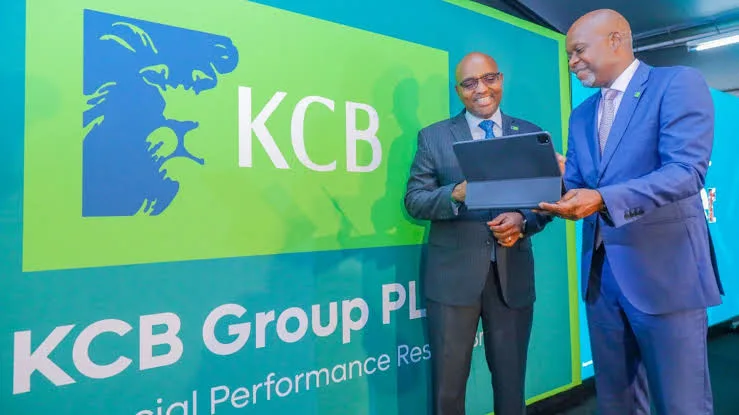
KCB Bank leadership
The bank can also clarify how the rental amount was calculated, what arrears existed, what notices were issued before auctioneers became involved and how the seized equipment was valued.
Powel, on his part, should also make available the records supporting his account, including transfer instructions, bank statements, invoices, communication with his supplier, rental documents and records relating to the equipment taken from his premises.
That is important because serious allegations against any institution should ultimately be tested against documents rather than public anger alone.