
By KRP
Walk into any supermarket anywhere in Kenya and you will find shelves laden with imported goods from foodstuff, electronics and pharmaceuticals. This happens even as some of our development blueprints purport to embrace industrialisation. This is the paradox of a nation that consumes so much of what it does not make.
Kenya’s goods trade deficit widened to a record Ksh. 1.68 trillion in 2025, as imports surged to Ksh. 2.795 trillion. Meanwhile, exports crawled to just Ksh. 1.112 trillion, according to the Kenya National Bureau of Statistics data. As a country, we are, in effect, exporting raw materials and importing finished goods in a model that sustains foreign factories.
The consequences of our consumption trends are not confined to statistics. The contribution of manufacturing to our GDP has fallen from 11.5 per cent in 2009 to a mere 7.1 per cent in 2025. This is the most significant compositional decline in the economy over that period.
Youth unemployment, meanwhile, stands at 15.25 per cent, with the Federation of Kenya Employers placing joblessness among those aged 15 to 34 at a staggering 67 per cent. Every imported television, every imported shoe, every imported packet of rice represents a job that could have been created in Kenya, a wage that could have been earned here, and a future that could have been built here. But clearly, that is not the path we have taken.
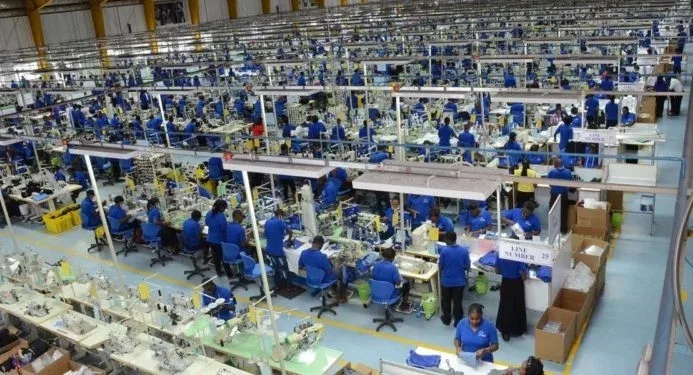
The remedy does not lie in rhetoric but in a deliberate shift from consumption to production. A political party that aims at convening its National Delegates Conference on the 28th of September 2026 in Nairobi has placed this transformation at the heart of its agenda. The party proposes to make manufacturing Kenya’s master sector of the economy.
It envisions Ward Production Hubs in all Kenya’s 1,450 wards, and on embracing a Buy Kenya Build Kenya law requiring 70 per cent of government procurement to be sourced locally.
Value addition is the engine of this vision. Kenya currently exports raw hides, raw macadamia, raw coffee, and raw tea, earning a fraction of what processed goods would fetch. The party’s pledge to ban the export of unprocessed raw materials and to build leather parks, edible oil parks, and fish processing plants at source is not economic theory. It is the practical pathway to national wealth.
The proposed shift demands affordable energy. Kenyan manufacturers currently pay around Ksh 18 per unit of electricity, itself a cost that makes local production uncompetitive against imports. The proposal to reduce industrial power to Ksh 9 per unit and to revive collapsed factories such as KICOMI, and RIVATEX addresses the supply-side barriers that have kept Kenyan industry dormant.
That dream is within reach. Kenya possesses fertile land, a youthful population, strategic geography, and a domestic market of over 50 million people. What it is lacking is a coherent industrial policy that treats manufacturing not as a residual sector but as the central organising principle of economic well being. The party’s ideology is a challenge to every Kenyan who believes that a nation that makes what it consumes is a nation that controls its own destiny.
Commonsense dictates that as long as we continue importing finished goods and exporting raw materials we shall relegate the building of our own factories to the peripheries of our national economic development agenda.
Time has come to build skills, and the markets that will allow Kenya to make what it consumes and consume what it makes. That approach will heal our warped balance of trade and drape our citizenry with a sense of unprecedented dignity as we secure the future of generations to come. KRP is of that opinion.
Penned by a party official