
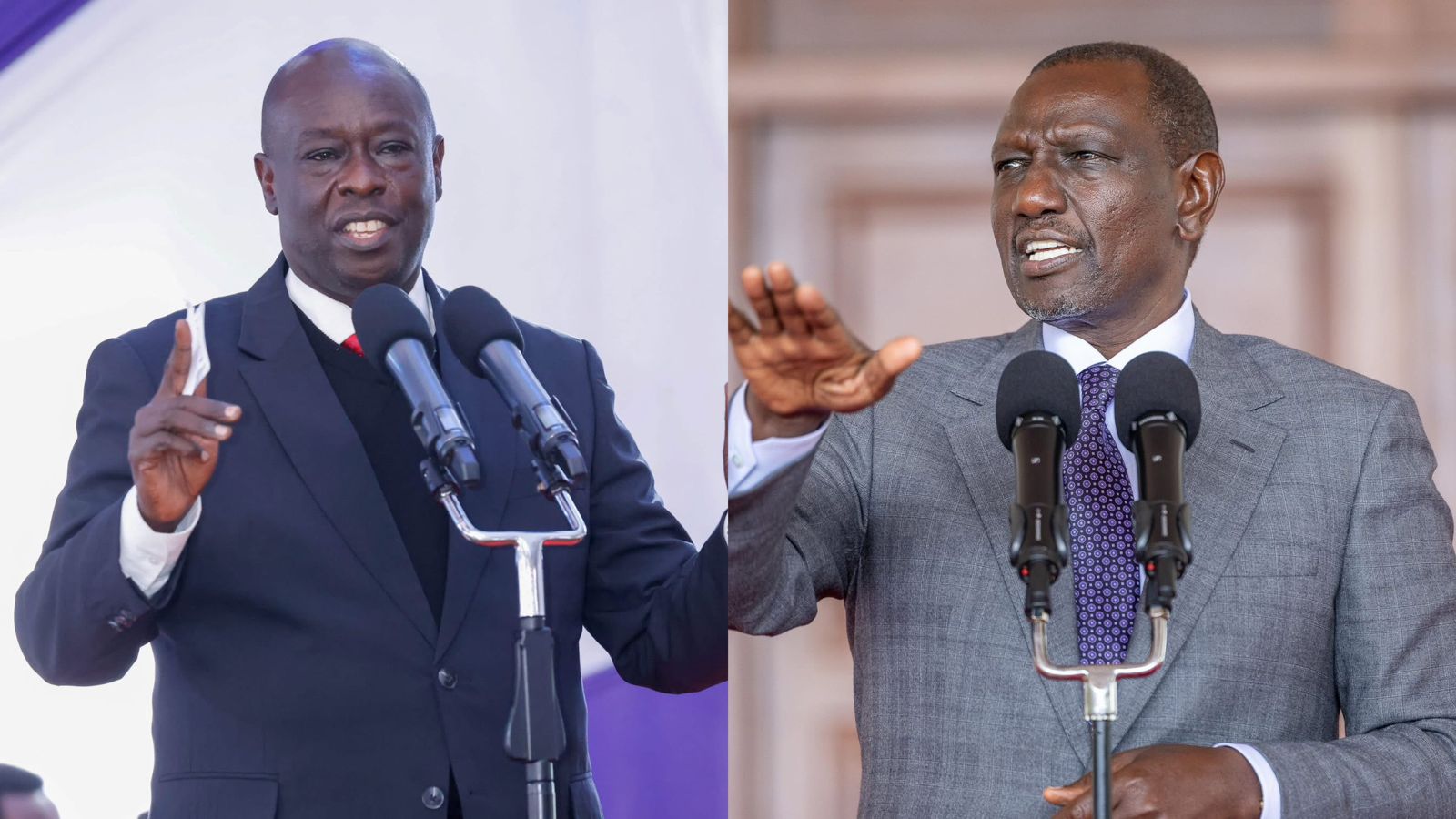
Public concern is growing over the escalating war of words between President William Ruto and his former deputy Rigathi Gachagua, with many Kenyans warning that the tone of their exchanges is setting a worrying precedent.
In recent days, the two leaders have traded sharp insults and serious allegations during public appearances and through political allies, drawing widespread attention across the country.
What began as a political fallout has now evolved into a personal and highly charged confrontation, sparking debate about leadership conduct at the highest level.
On social media, Kenyans have not held back. “A symbol of national unity should not sink that low,” wrote one netizen, capturing the frustration shared by many who believe the exchanges are unbecoming of senior leaders.
Others have accused both sides of diverting attention from pressing national issues such as the cost of living, youth unemployment, and service delivery.
Legal experts have also weighed in, pointing out that Kenya has clear laws governing public speech. The National Cohesion and Integration Act, enforced by the National Cohesion and Integration Commission (NCIC), prohibits hate speech, incitement, and remarks that could fuel division among communities.
Depending on the nature of the statements made, individuals found culpable risk fines or even imprisonment.
The unfolding situation comes amid heightened political activity as leaders begin positioning themselves ahead of the 2027 general election.
Analysts warn that unchecked political rhetoric could deepen divisions and erode public trust in institutions.
There are now growing calls from civil society groups and citizens alike urging restraint, maturity, and issue-based politics. Many argue that leaders must rise above personal differences and demonstrate the unity they are expected to embody.