
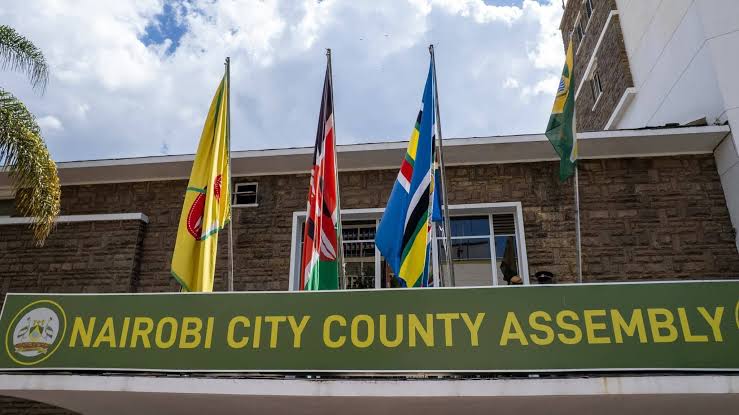
A recent audit report for the financial year ending June 2025 has raised concerns about financial management and governance at the Nairobi County Assembly after several irregularities were flagged by Auditor General Nancy Gathungu.
According to the report, some officers failed to follow the proper imprest procedures that guide how public funds should be issued and accounted for. Instead of receiving official imprest before carrying out assignments, officers reportedly used their own money for official duties and later applied for reimbursements.
The audit noted that this created room for questionable claims and weak accountability.
The report further revealed that some reimbursement claims were supported using documents that could not be verified.
Among the issues highlighted were receipts carrying duplicated serial numbers, supplier details that could not be confirmed, and KRA PINs that were either invalid or non-existent. These findings raised concerns about the credibility of some expenditure records presented to auditors.
In one case mentioned in the report, the deputy minority leader allegedly received Ksh 150,000 despite the approved quarterly limit being Ksh 100,000.
This meant the amount exceeded the allowed limit by Ksh 50,000. The audit also stated that several officers were given funds beyond approved limits without proper authorization or supporting approvals.
The report also questioned the Assembly’s spending on employee compensation.
Auditors noted that salaries and related payments consumed about 50 percent of the Assembly’s Ksh 1.9 billion total revenue. This exceeded the 35 percent ceiling set under the Public Finance Management regulations for county governments.
Another concern raised involved pending debts owed to suppliers and service providers. According to the audit, the Assembly’s management could not explain why Ksh 103.6 million owed to vendors had remained unpaid for more than one year.
On governance matters, the audit found that the Implementation Select Committee had 22 members, which exceeded the legal maximum of 17 members. Auditors stated that no explanation or approval was provided for the increase.
The committee was also found not to have met the constitutional gender requirement, as it consisted of 18 men and only 4 women.