
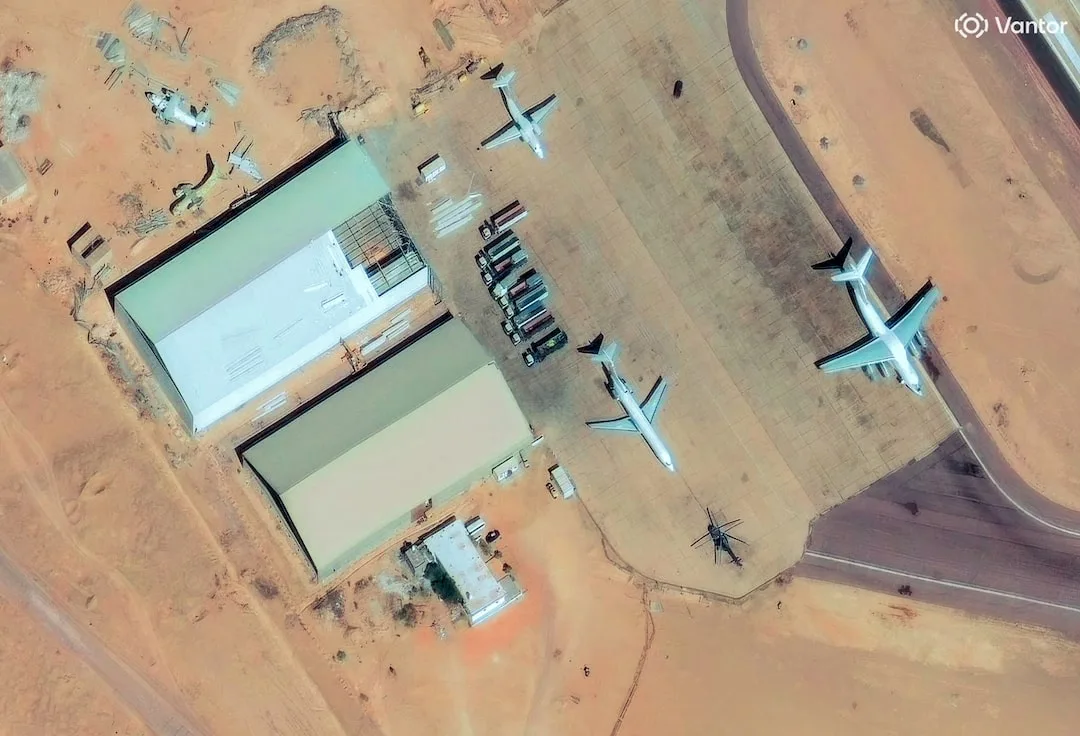
A new draft report by United Nations experts has added fresh details to claims that a network of aging Boeing aircraft may have been used to transport weapons, drones, military equipment, and foreign fighters to Sudan’s Rapid Support Forces (RSF) during the country’s ongoing civil war.
The findings have drawn international attention because they suggest that military supplies continued to reach RSF-controlled areas despite a long-standing United Nations arms embargo on Darfur.
The report expands on an earlier Reuters investigation that tracked several aircraft allegedly linked to companies associated with former United States Army Special Forces soldier and government contractor Steven Shaulis.
According to the draft report, investigators gathered information from four independent sources indicating that Boeing aircraft were used to move RSF fighters, foreign mercenaries, drones, weapons, and other military supplies into Darfur.
The evidence reportedly came from eyewitness accounts in Nyala, which serves as a major RSF logistics hub, as well as information shared by two UN member states.
Investigators say the aircraft operated through a route connecting N’Djamena, the capital of Chad, to Nyala in western Sudan.
The report notes that three Boeing 727 aircraft arrived in Chad in late 2024, but there were no official records showing their subsequent movements. This has led investigators to believe that some flights may have been conducted in ways designed to avoid detection.
The Reuters investigation had earlier used satellite imagery, mobile phone data, and open-source video evidence to track aircraft movements that did not appear on commercial flight-tracking systems.
One Boeing 737 linked to the network was reportedly destroyed in May 2025 while carrying RSF fighters.
The report identifies three Boeing 727 aircraft as being central to the alleged supply operation. One of the planes was reportedly purchased in Brazil, while two others were acquired from Kalitta Charters II in Michigan.
The aircraft were allegedly linked to Contractor Airways, a company partly owned by Steven Shaulis and Craig Munro.
Shaulis has not publicly responded to questions regarding the report. Munro has denied claims that Contractor Airways had any connection to the RSF and has disputed reports that the aircraft landed in Nyala or Libya.
Chad’s Civil Aviation Authority also stated that the aircraft did not have authorization to operate from the country. However, officials noted that military aviation activities fall outside the agency’s direct control.
Chad’s Foreign Minister Abdoulaye Sabre Fadoul has maintained that his country’s role in the Sudan conflict has been limited to diplomatic efforts.
Beyond the aircraft operations, the report also focuses on the involvement of foreign fighters.
Investigators claim there is credible evidence that between 1,500 and 2,000 Colombian mercenaries supported RSF military activities.
The fighters, reportedly known as the Desert Wolves, are said to have established a base in Nyala in March 2025.
According to the report, the group was recruited through a UAE-based company called Global Security Services Group (GSSG).
Investigators allege that the mercenaries assisted with drone operations, military planning, and combat support during operations that led to the capture of al-Fashir in October 2025.
The company has denied any involvement in mercenary recruitment or military activities in Sudan.
A spokesperson for the United Arab Emirates mission to the United Nations said authorities investigated the allegations and found no evidence linking the company to mercenary operations.
Colombia’s government has previously acknowledged the presence of Colombian fighters in Sudan and expressed regret over their involvement.
Sudan’s conflict began in 2023 after tensions between the national army and the RSF escalated into war during a failed transition toward civilian rule. Since then, the fighting has caused widespread destruction, displaced millions of people, and triggered a severe humanitarian crisis.
The draft UN report is expected to be formally published in September. If its findings are endorsed by the UN Security Council, governments, aviation companies, and private contractors linked to the allegations could face increased international scrutiny over their possible role in supporting military operations in Sudan despite existing sanctions and arms restrictions.