
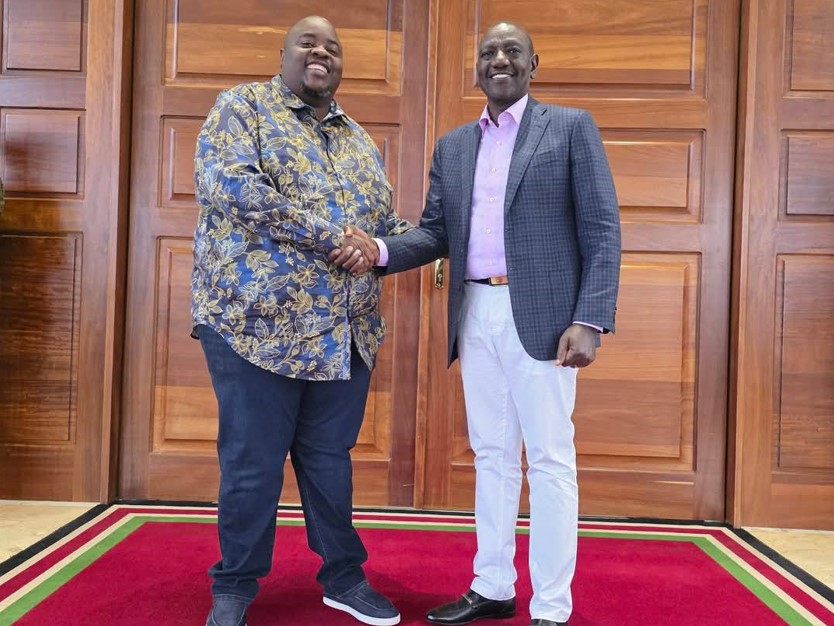
Kenya’s plan to modernise Jomo Kenyatta International Airport should have been a moment of national confidence. Instead, the reported entry of controversial Zimbabwean businessman Wicknell Chivayo’s company into the Sh375 billion JKIA expansion tender has reopened the same old wound: secrecy, political proximity and the disturbing smell of conflict of interest in public mega-projects.
This is not a small village tender. JKIA is Kenya’s aviation gateway, a strategic national asset and one of East Africa’s most important transport hubs. Any decision touching its expansion, financing, design, ownership structure or future operation must be handled with extreme transparency. Kenyans are not asking for too much. They are asking to know who is getting the deal, why they were selected, how the project will be financed, who carries the risk and whether political connections played any role.
The reported involvement of IMC Construction Kenya, associated with Chivayo, raises a direct public-interest question: why should a businessman reported to enjoy close access to President William Ruto be anywhere near a sensitive public infrastructure deal unless every document, evaluation score and beneficial ownership record is placed in the open?
Kenya has been here before.
The Adani airport deal collapsed under the weight of public anger, court action, labour fears and questions over transparency. Workers protested. Civil society raised the alarm. Lawyers moved to court. Kenyans rejected the idea that a national airport could be placed under opaque private hands without full public disclosure. The government later cancelled the deal, but the lesson seems to have been ignored.
The problem with the reported JKIA tender is not that the airport does not need expansion. It does. JKIA is ageing, congested and overdue for modernisation. The problem is that Kenya keeps treating public infrastructure as if citizens are spectators instead of shareholders. A project of this size cannot be sold to the public through selective statements, political speeches and carefully managed announcements. It must be defended through documents.
For a Sh375 billion project, Kenyans deserve to see the full procurement trail. They deserve to know the bidders, the evaluation criteria, the financial model, the equity structure, the role of each joint venture partner, the debt exposure, the repayment model and the safeguards against inflated costs. They deserve to know whether the winning entities have the technical capacity, financial strength and integrity record required for a project of this scale.
Anything less is unacceptable.
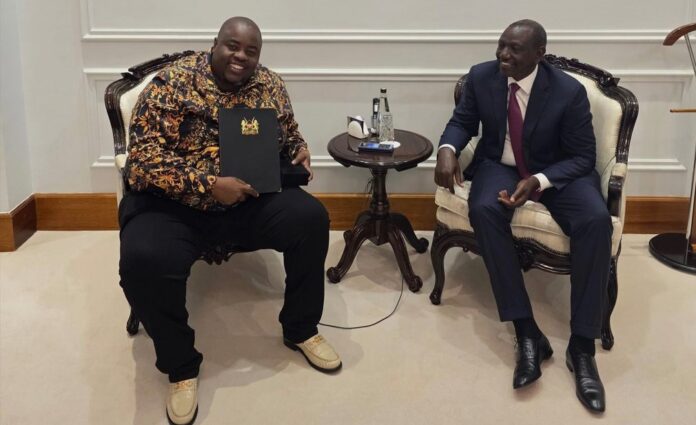
The phrase “conflict of interest” should not be treated as a technical inconvenience. In public procurement, perception matters. When a politically connected businessman is reported to have a stake in a major state-linked project, the burden shifts to the government to prove that the process was clean, competitive and insulated from influence. Silence only deepens suspicion.
The Ruto administration cannot campaign on accountability, preach fiscal discipline and then ask Kenyans to trust another mega-deal whose details remain unclear. This is especially troubling at a time when citizens are already carrying a heavy tax burden, public debt remains a national concern and essential services continue to struggle for funding.
Mega-projects have become Kenya’s favourite hiding place for questionable public finance. The bigger the figure, the easier it becomes to bury accountability under technical jargon. “Design and build.” “Public-private partnership.” “National Infrastructure Fund.” “Strategic investment.” These phrases may sound polished, but they mean little if the public cannot trace the money and identify the real beneficiaries.
The government must answer several questions before a single shovel touches JKIA.
Who are the beneficial owners of IMC Construction Kenya? What exact stake does the company hold in the reported consortium? What role will it play in construction, financing or project management? Was the company part of the original bid or was it brought in later? Did any public official, political adviser or state-linked intermediary influence the award? What due diligence was done on all consortium partners? Will Parliament be allowed to scrutinise the contract?