
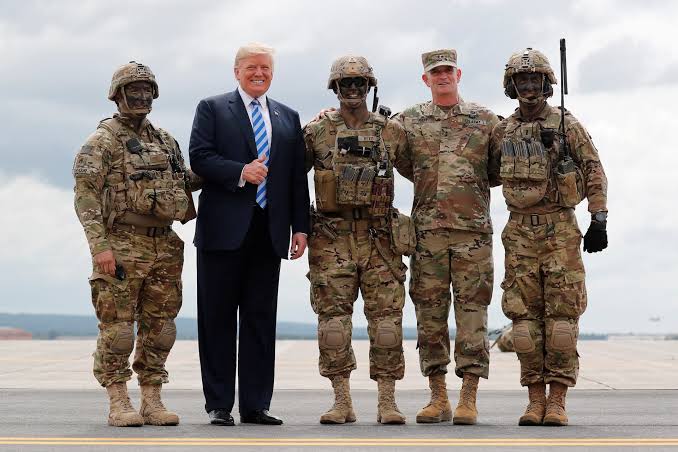
The United States has deployed military personnel to Kenya to support the establishment of a temporary Ebola isolation facility at Laikipia Air Base as East Africa faces growing concerns over the spread of the disease.
The move is part of a wider US government response package valued at about $220 million (KSh28 billion), aimed at improving preparedness and response efforts across the region.
The facility is expected to play a key role in supporting Ebola containment efforts linked to ongoing outbreaks in Uganda and the Democratic Republic of the Congo. According to reports, the personnel sent by the US Africa Command (AFRICOM) include experts in engineering, communications, security, logistics, and medical planning.
US officials have emphasized that the military personnel will not be involved in providing direct medical treatment to Ebola patients. Their role will mainly focus on construction work, logistical support, communications systems, and helping coordinate operations for agencies involved in the response.
The facility is designed to serve as a temporary isolation and monitoring center for people who may have been exposed to the virus, including American citizens, aid workers, and government personnel operating within the region.
The deployment comes at a time when Kenya has stepped up its disease surveillance and preparedness measures despite not recording any confirmed Ebola cases. Authorities have increased screening procedures at airports, border crossings, and other points of entry while also strengthening emergency response systems in case the disease spreads into the country.
However, the project has generated significant debate and concern. The High Court recently suspended the construction and operation of the facility following a petition filed by the Katiba Institute. The organization argued that there had been insufficient public participation and transparency surrounding the project. The matter is expected to return to court for further hearing on June 16.
Residents in parts of Laikipia have also voiced concerns about the facility, with some staging demonstrations to protest what they describe as a lack of consultation and fears about possible health risks.
Despite the opposition, Health Cabinet Secretary Aden Duale has defended the project, saying it will strengthen Kenya’s ability to respond quickly and effectively to regional health emergencies.
Both Kenyan and US authorities insist that the temporary isolation facility remains an important part of efforts to improve public health preparedness and enhance the region’s capacity to respond to the Ebola threat.