
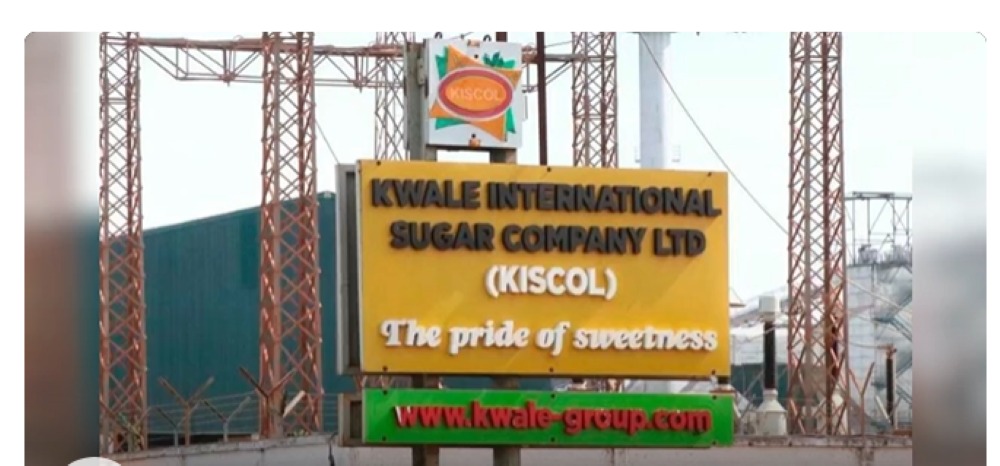
On paper, it looked like the future. A sprawling sugar estate on Kenya’s coast.
Thousands of acres of irrigated cane. A gleaming factory rising from the scrublands of Kwale.
And a promise whispered across villages: plant cane – prosperity is coming.
Nearly two decades later, that promise lies buried in fields of dry stalks and unpaid debts.
But somewhere far away – in courtrooms, boardrooms and balance sheets – the story now revolves around a very different number.
KSh 24 billion.
That is what a Kenyan court has ordered the government to pay the investors behind the failed Kwale International Sugar Company Limited (KISCOL) after ruling that the state broke its promise to secure the land needed for the project.
For investors, it is a victory. For farmers, it is a haunting question.
If billions can be calculated for investors, who is counting the losses of the farmers?
The day the sugar dream arrived
The dream began in 2007. Kenya’s coast was to host one of the most ambitious agricultural investments in the country’s history: a massive sugar complex stretching across roughly 15,000 acres of land in Kwale County.
Behind it stood a partnership between Mauritius-based sugar giant Omnicane Limited and Kenya’s Pabari Group.
The Mauritian firm bought a 25% stake in the venture for about $20 million (KSh 2.6 billion), joining local investors to build a KSh 50 billion integrated sugar estate and mill.
The blueprint was seductive. A factory capable of crushing thousands of tonnes of cane a day. An ethanol plant.
An 18-megawatt power station fuelled by bagasse.
Most importantly, an outgrower programme designed to pull thousands of local farmers into the value chain.
The message to farmers was simple.
Plant cane.
Supply the factory.
Prosper.
Many believed it.
They cleared land.
Borrowed money.
Signed contracts.
And waited.
When the land began to fight back
But the land itself had other plans. The 15,000 acres that were supposed to host the sugar estate quickly became a battlefield of competing claims.
Communities said the land was ancestral. Squatters moved in. Part of the concession was later carved out for mining operations.
What had begun as a grand investment slowly turned into a maze of disputes.
In the courtroom years later, the case hinged on a deceptively simple legal phrase:
“Quiet and peaceful possession.”
Investors argued that the government had promised them uncontested land.
The court agreed.
It ruled that the state had failed to secure the land and had therefore sabotaged the project from the start.
Thus, the KSh 24 billion judgement was born.
Meanwhile, in the cane fields…
While lawyers battled over contracts and land titles, another story was unfolding in the villages around the plantation.
It was quieter. But far more brutal.
Nearly 2,000 farmers had already planted cane.
They had borrowed money from lenders like the Agricultural Finance Corporation.
They had taken advances and committed their land.
And then something strange began to happen. Payments for harvested cane slowed.
Then stopped.
Some farmers say deductions appeared in their accounts for a Commodity Fund loan they insist they never received.
Without income from cane deliveries, repayments became impossible.
Debt began spreading across the villages.
Land that had been pledged to grow sugarcane started appearing in auction notices.
Families who had expected prosperity instead faced foreclosure.
The day the factory fell silent
Then came the moment that many farmers remember with painful clarity.
July 2024. Without warning, the factory stopped operations.
For the farmers, the consequences were immediate.
Fields of cane – mature, ready, valuable – suddenly had nowhere to go.
Sugarcane is not a patient crop. If it is not milled quickly, it deteriorates.
Entire harvest cycles simply died in the fields.
Some farmers watched helplessly as fires swept through their plantations, destroying months of labour in a single afternoon.
What had once been a promise of prosperity became a landscape of losses.
The men behind the machine
Behind the towering machinery and irrigation pipes stood the people who shaped the project.
One of the most visible figures was Harshil Kotecha. At first glance, he appears almost disarmingly modest.
Slim, soft-spoken and deliberate, his social media presence is filled with religious reflections and family moments – the image of a man rooted in discipline and faith.
But critics say the calm image is carefully curated. Workers who interacted with him describe a far harder edge.
They portray a man who understands power – and how to exercise it quietly.
For years, workers complained that statutory deductions taken from their wages – including contributions meant for the National Social Security Fund – were not remitted to the government.
Complaints were raised. Authorities were notified. Nothing appeared to change. To critics, the silence was deafening.
The man who stayed in the shadows
Yet insiders say Kotecha was not the only force inside the project.
If he was the face, Kaushik Pabari was often described as the strategist.
Pabari, linked to the Pabari Group’s regional business empire, rarely appears in public. Those who have encountered him say he prefers to operate away from the spotlight.
But within the project’s corridors of power, his influence was widely acknowledged.
Former workers claim that in private meetings he sometimes spoke disparagingly about African workers.
Those claims are difficult to verify independently.
But they have surfaced repeatedly over the years.
What many people who dealt with him do agree on is this:
Pabari understands systems.
Those who interacted with him say he treats government power not as an obstacle but as a landscape — something to navigate, influence and occasionally bend.
Critics even claim he once described corruption not as a scandal but as “how things get done.”
Whether exaggerated or not, such perceptions shaped how many locals came to view the project.
Over time, voices that once challenged it – activists, critics and even parts of the media – seemed to fade.
The unanswered ledger
The official story of KSh 24 billion compensation ends in court. A ruling. A number.
It is one of the largest compensation awards ever issued against the Kenyan government in an investment dispute.
But in the villages of Kwale, the story feels unfinished.
Because there is another ledger that has never been calculated. It contains smaller numbers.
A farmer’s unpaid harvest.
A loan that could not be repaid.
A piece of land sold at auction.
Thousands of such entries are scattered across the countryside.
Together, they may add up to a number no court has yet calculated.
And until someone does, the sugar fields of Kwale will remain not a monument to development but a reminder of a dream that promised sweetness and left behind the taste of debt.