

Recent remarks by politician and public commentator Justina Wamae have sparked fresh debate about the internal state of the Orange Democratic Movement and the wider culture of politics in Kenya.
Speaking openly, Wamae suggested that there may have been a deliberate effort to weaken the party from within by placing a leader she described as ineffective at the top.
Her comments have drawn attention from political observers and members of the public who are already concerned about the future of major political parties in the country.
Wamae explained that such a move, if true, may have been meant to cause internal collapse rather than growth. She said the situation created space for manipulation, confusion, and endless internal battles.
According to her, this environment allowed people driven mainly by personal ambition to compete for small positions of influence instead of working together for the good of supporters and the party as a whole. She noted that this struggle for power has weakened unity and distracted members from important national issues.
In her words, she stated that the situation led to self-destruction, manipulation, division, and constant fights among those chasing what she described as “tokens” of power. She also added that the situation no longer concerns her directly, suggesting that she has emotionally and politically distanced herself from the internal conflicts she described. Her tone reflected both disappointment and detachment, showing that while she observes what is happening, she no longer feels personally tied to the outcome.
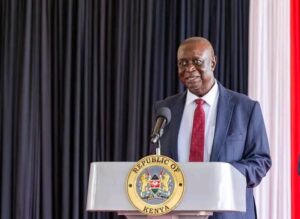
Siaya county Senator and ODM party leader Dr Oburu Odinga. Photo Courtesy: People Daily.
Although Wamae did not name any individuals or present specific proof to support her claims, her remarks have revived long-standing discussions about internal democracy within ODM.
Over the years, the party has faced repeated internal disagreements, especially during leadership transitions, party nominations, and moments following election losses. These periods have often been marked by tension, disagreements, and competing interests.
Political analysts note that such situations are not unique to ODM. Many major political parties in Kenya experience similar struggles, especially in a highly competitive political environment. Claims of outside interference or deliberate weakening of party structures are common, though they are often difficult to confirm. Some observers believe such claims reflect deeper internal challenges rather than external plots.
Wamae’s comments also raise wider questions about the nature of politics in the country. Her reference to “greed for tokens” points to a system where personal gain can sometimes outweigh shared values, long-term goals, or public service. This mindset, she suggests, encourages endless power struggles and weakens unity.