
Mt Kenya politician Ngunjiri Wambugu has sparked fresh political debate after reacting to former Deputy President Rigathi Gachagua’s recent public appearance in protective gear.
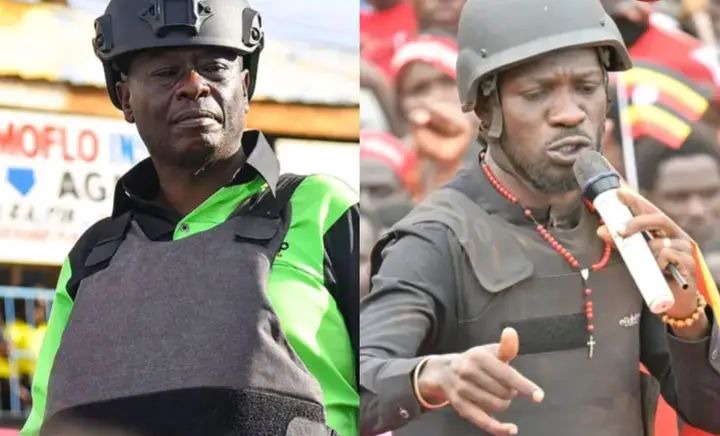
In a Facebook post that quickly gained traction, Wambugu wrote, “Oooooh! This is where Jofri is getting his inspiration!” The remark was accompanied by two side-by-side photos that set social media buzzing.
One image showed Gachagua addressing supporters while wearing a helmet and a bulletproof vest following the reported disruption and attack on his convoy.
The other featured Ugandan opposition leader Bobi Wine, who has previously appeared at rallies dressed in similar protective gear amid security threats.
Wambugu appeared to suggest that Gachagua’s choice of regalia was not coincidental but rather borrowed from Bobi Wine’s well-known protest style.
The comparison immediately ignited online discussion, with supporters and critics offering sharply different interpretations.
Some netizens agreed with Wambugu, arguing that the imagery was calculated to project victimhood, resistance, and political defiance.
They claimed such visuals are powerful tools often used by opposition figures to rally public sympathy and international attention.
Others, however, defended Gachagua, insisting that the security gear was justified given the chaos surrounding his convoy, including tear gas and alleged stoning. To them, the helmet and vest symbolized personal safety rather than political theatre.
The comparison to Bobi Wine added a regional dimension to the debate. Bobi Wine has long been associated with confrontational politics against the Ugandan state, often appearing armored as a statement against repression.
Drawing parallels between the two leaders has fueled speculation about the message Gachagua intended to send.
Political analysts note that symbolism plays a growing role in East African politics, especially in moments of tension. What leaders wear, how they appear, and the images they share can be as influential as their speeches.
Wambugu’s post, though brief, has once again highlighted how visual politics can shape narratives, provoke reactions, and deepen divisions in an already charged political environment.