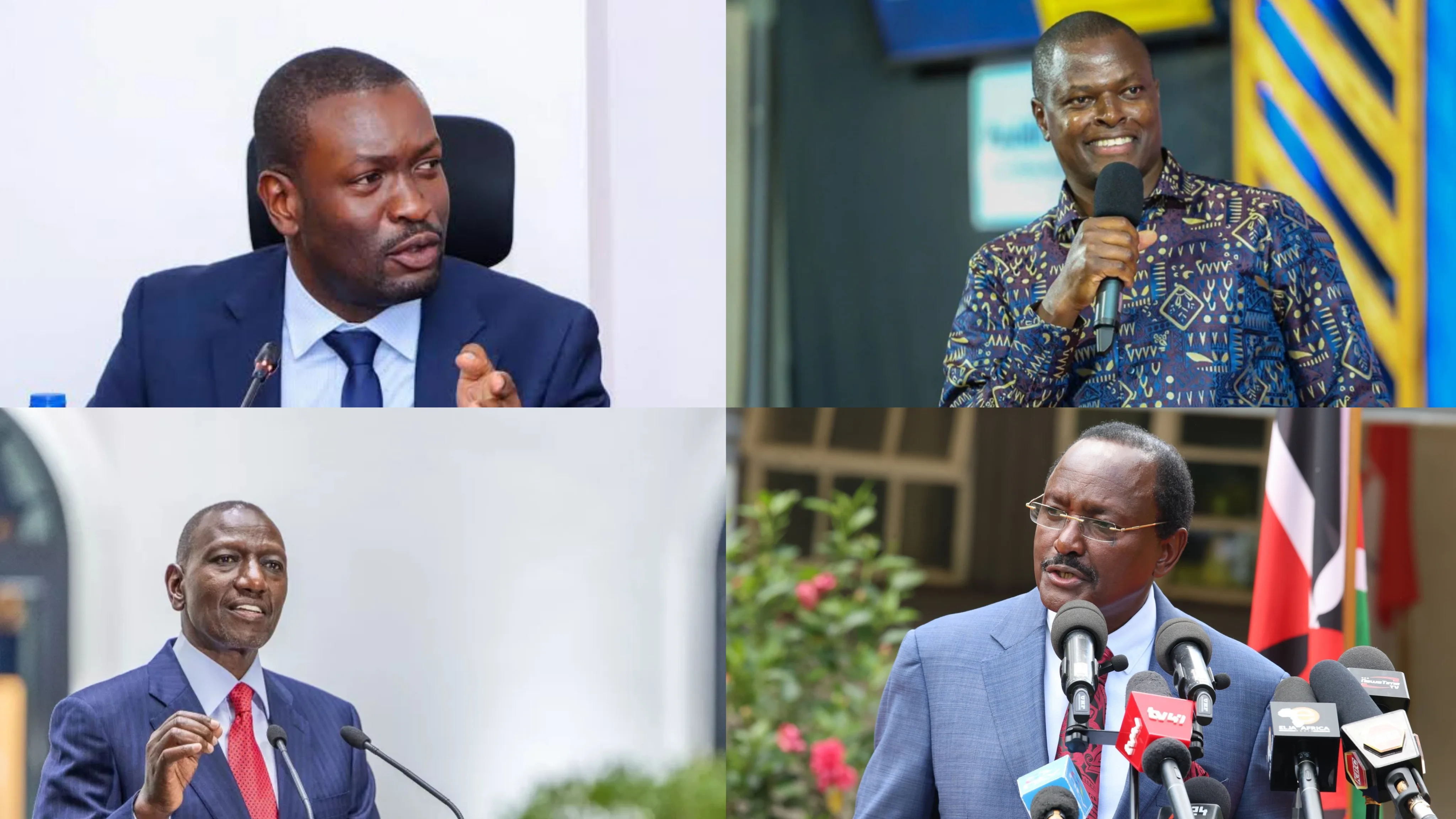
Nairobi Senator Edwin Sifuna has topped the November 2026 presidential poll conducted by Mwelekeo Insights, ahead of President William Ruto, Fred Matiang’i, Kalonzo Musyoka and Ndindi Nyoro.
Sifuna emerged first with 25.1%, opening an 11.7 percentage-point lead over Ruto, who came second with 13.4%.
Former Interior Cabinet Secretary Fred Matiang’i placed third with 12.6%, narrowly ahead of Kalonzo Musyoka, who recorded 12.5%.
Sifuna’s lead also stands out against the gap between the candidates behind him. Ruto was 11.7 percentage points behind the senator, while Matiang’i and Kalonzo were separated by just 0.1 percentage points. The close figures underline how tightly grouped several contenders were in the middle of the ranking.
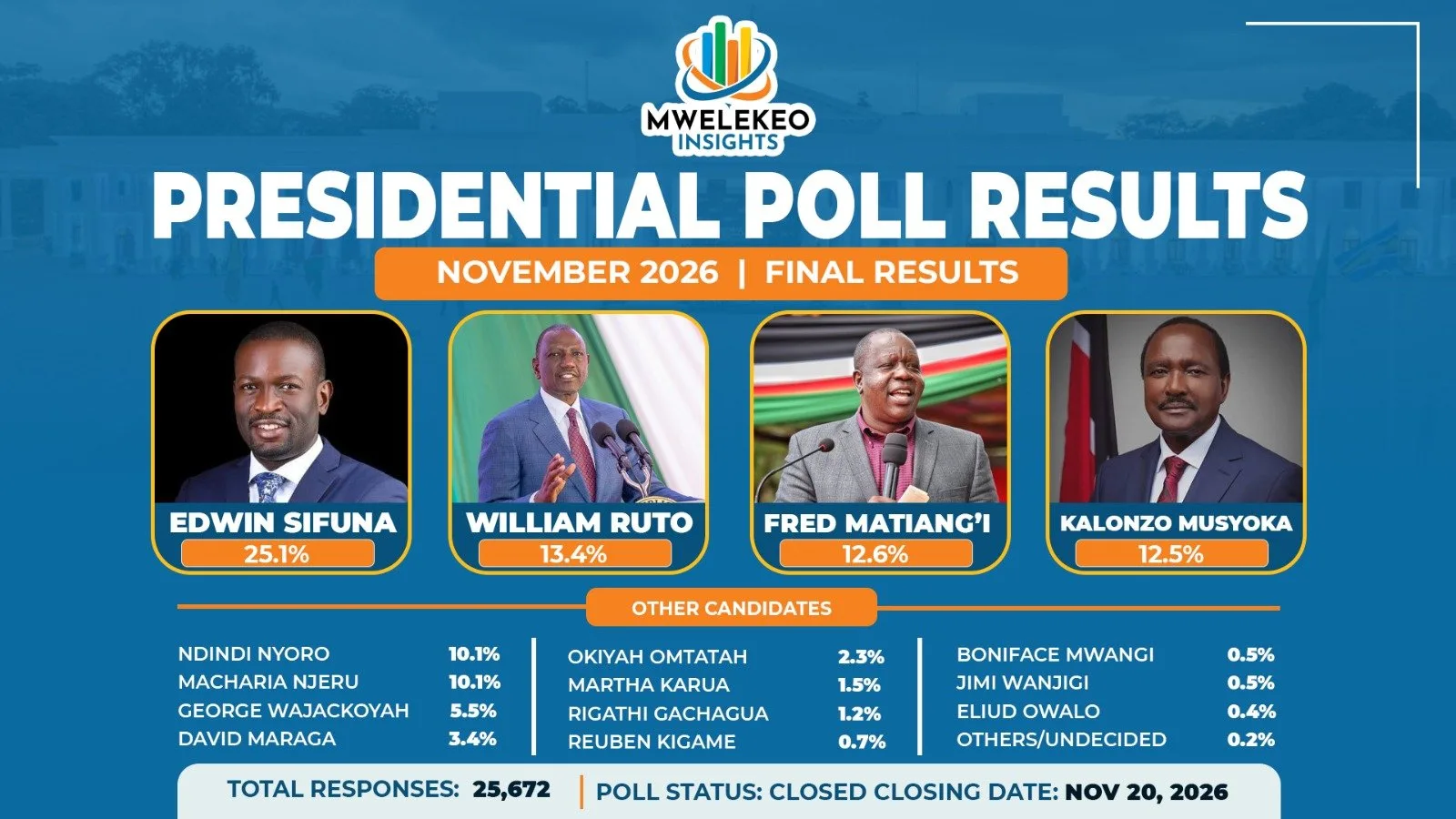
Nyeri Senator Ndindi Nyoro was among the next-ranked contenders, recording 10.1%. He tied with Macharia Njeru, who also received 10.1%, in the national poll.
George Wajackoyah registered 5.5%, followed by former Chief Justice David Maraga at 3.4%. Okiyah Omtatah received 2.3%, while Martha Karua recorded 1.5%.
Former Deputy President Rigathi Gachagua garnered 1.2%, while Reuben Kigame received 0.7%. Boniface Mwangi and Jimi Wanjigi each recorded 0.5%, while Eliud Owalo had 0.4%. Others or undecided participants accounted for 0.2%.
The poll ran nationally from November 11 to November 20, 2026, and attracted 25,672 responses. It featured 15 named presidential contenders, alongside an option for respondents who supported other candidates or remained undecided.
Mwelekeo Insights said the exercise was conducted online through voluntary participation. The results therefore reflect the preferences of people who chose to take part and should not be treated as a statistically representative measure of the Kenyan electorate.
The organisation cautioned that no conventional margin of error applies to the findings and that they should not be interpreted as a prediction of the outcome of the 2027 General Election.
The results offer a snapshot of political preferences expressed by participants during the polling period, as potential contenders continue to feature in discussions ahead of the next general election.