
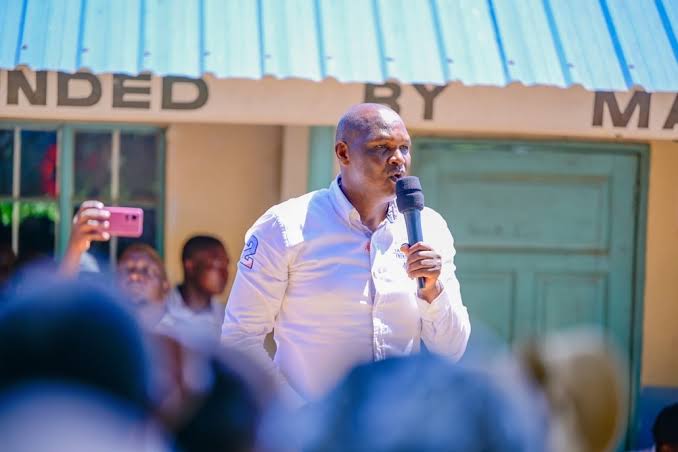
Farouk Kibet recently found himself at the center of a growing political storm after facing an unexpectedly hostile reception in Bungoma County.
As he stood up to address a large gathering, sections of the crowd repeatedly interrupted his speech with loud chants and jeers. This made it incredibly difficult for President William Ruto’s influential personal aide and key political strategist to deliver his intended message.
The dramatic scenes quickly became the main talking point in national conversations, with videos of the shouting match circulating widely across various social media platforms.
The development immediately caught the attention of prominent political commentator and blogger Pauline Njoroge.
She reacted online with a sarcastic remark, hinting that things in Bungoma had clearly not gone according to plan for the senior presidential aide. Her commentary added serious momentum to an already heated online debate, as many Kenyans began interpreting the incident as a clear sign of shifting political moods in parts of Western Kenya.
For political observers, this confrontation highlights a deeper issue. It shows the continued challenges that the ruling Kenya Kwanza administration faces when trying to expand its influence in regions that have traditionally leaned toward opposition politics.
What was originally supposed to be an ordinary public event a local fundraiser quickly turned into a powerful display of public expression.
The open rejection witnessed during the event reinforced the idea that some local communities still strongly resist government-allied figures who come to campaign in their backyards.
The incident also sparked intense debates among everyday citizens online. While some people questioned why personal aides to the president are taking on such a prominent role in national politics, calling for more accountability from un-elected officials, others viewed it differently.
Many argued that the people of Western Kenya are simply defending their unique political identity against what they see as external influence and political interference.
The Bungoma episode has emerged as a significant flashpoint in the country’s highly competitive political landscape. It demonstrates a growing trend where public gatherings are no longer just passive events for politicians to give long speeches. Instead, they are turning into real-time battlegrounds where powerful leaders are directly tested by the genuine mood of ordinary citizens, proving that the political ground is constantly shifting.