
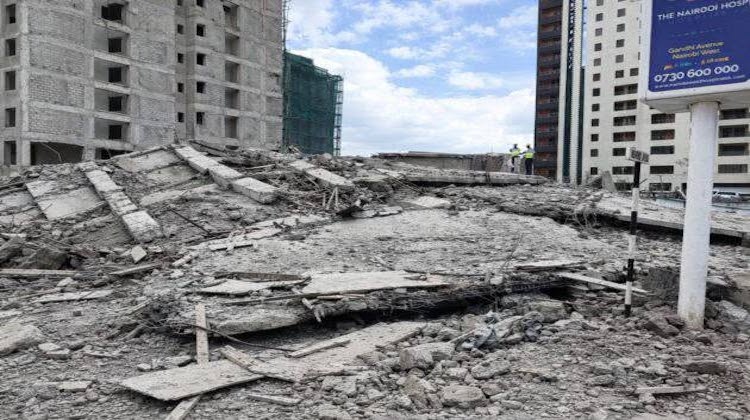
More questions than answers have emerged after only four people were charged over the collapse of Mamliz Towers in Nairobi’s South C estate, a tragedy that claimed the lives of two people on January 2, 2026.
The development has sparked public concern, especially after earlier indications that dozens of individuals linked to the project could face prosecution.
The four accused Abdishakur Muse Mohammed, Yussuf Mohammed Yussuf, Daniel Alphonse Odhiambo and Gideon Chege Gakundi alias Gideon Chege Mwangi appeared before the Milimani Law Courts and denied two counts of manslaughter.
They are accused of unlawfully causing the deaths of Ali Adan Galgalo Abdi and Hassan Huka when the building collapsed.
However, attention has quickly shifted from those who appeared in court to those who did not.
According to information previously released by the Director of Public Prosecutions (DPP), a total of 36 individuals had been approved for prosecution after investigators found sufficient evidence linking them to the project.
The fact that only four were arraigned has left many people wondering what happened to the rest.
The prosecution told the court that additional suspects are expected to take plea later, while others had secured court orders stopping their prosecution.
Even so, questions continue to be raised about whether all those found responsible will ultimately face justice.
The case goes beyond the loss of life. Prosecutors allege that some of the accused were involved in the use of forged documents during the approval process of the project.
Abdishakur Muse Mohammed and Yussuf Mohammed Yussuf face several forgery-related charges, including claims that they created and submitted fake planning approval documents and Environmental Impact Assessment licences to support the development.
Investigators also allege that the project proceeded without a valid Environmental Impact Assessment licence, a requirement meant to ensure developments meet environmental and safety standards before construction begins.
All four accused have been charged with commencing the project without the necessary environmental approval.
The collapse has once again exposed concerns about how building projects are approved, monitored and inspected.
The DPP had approved charges not only against developers and professionals linked to the construction but also against several public officials accused of abuse of office and neglect of official duty. These allegations point to possible failures at different stages of the regulatory process.
One of the most notable names approved for prosecution was suspended Director of Urban Planning Patrick Analo Akivaga.
Yet he was not among those charged in court, adding to the growing questions surrounding the case.
For families who lost loved ones, the court proceedings are only the beginning of a long search for accountability.
The tragedy has become a symbol of wider concerns about building safety, enforcement of regulations and the consequences of failures within public institutions.
Chief Magistrate Caroline Mugo granted each of the four accused a cash bail of Sh2 million as the case moves forward. As investigations and court proceedings continue, many Kenyans will be watching closely to see whether all individuals identified in the investigation file will eventually appear before the courts.
The gap between the number of people approved for prosecution and those actually charged remains one of the biggest unanswered questions in the Mamliz Towers collapse case.