
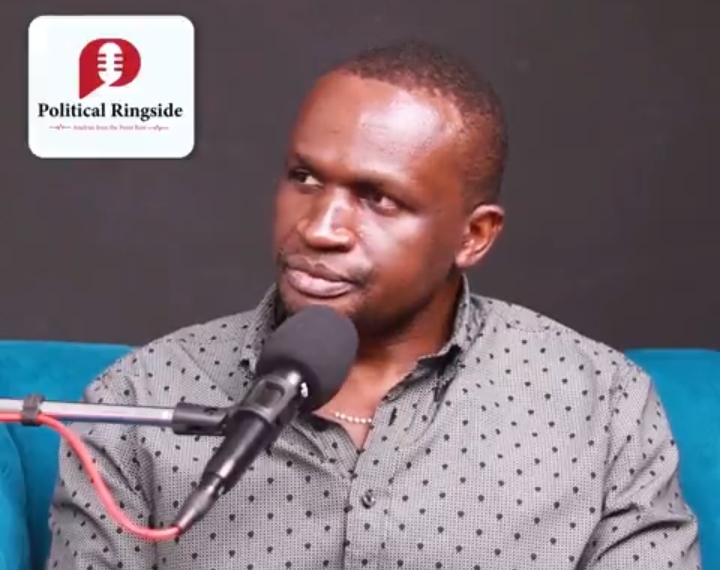
Political Ringside, a political talk show that focuses on honest and open conversations about leadership and public affairs, recently featured a discussion that touched on a long standing problem in Kenyan politics, the exclusion of many people from real participation.
During the show, political strategist Ndege Serikal shared his personal journey and explained why politics cannot work well when large groups, especially young people and women, are kept on the sidelines. His message was clear and simple, politics only grows stronger when everyone is allowed to take part in a meaningful way.
Ndege Serikal, whose real name is Frederick, spoke about his time in student leadership at the University of Nairobi between 2008 and 2016.
It was during this period that he adopted the name Ndege, which became part of his identity in activism and leadership. He explained that campus politics shaped his understanding of power, inclusion, and resistance.
As a student leader in the Students Organisation of Nairobi University, he often found himself in trouble with university authorities and even government agencies.
He faced suspensions and expulsions because he stood up for student rights. At the time, student activism was viewed as dangerous and disruptive, but Serikal believes those difficult moments helped him grow.
He said campus leadership teaches people how to survive pressure, speak confidently, and handle public attention. These skills are important in national politics, where criticism and tension are common.
According to Serikal, many leaders today lack these skills because they never experienced open debate and struggle at a young age. He believes student leadership remains one of the best training grounds for future national leaders.
One key issue Serikal strongly warned against is tokenism. He explained that young people are often included in politics only for show, without being given real power.
This problem, he noted, has existed since the early years after independence. Youth are sometimes hired to chant slogans, attend rallies, or support politicians for money, but their opinions are ignored.
Serikal urged young people not to stay silent in such spaces. He said that once you are inside decision making spaces, you should speak up and make your voice count, regardless of how you got there.
He also spoke about the importance of safe spaces in politics. These are spaces where people can share ideas without fear of violence, insults, or punishment.
He pointed out that women suffer the most in political spaces because of intimidation, lack of funds, and online harassment. To address this, Serikal encouraged leaders to use simple tools like WhatsApp, Facebook, and X to create discussion spaces where everyone feels safe to speak.
He added that leaders must also learn to accept criticism without turning personal.
Serikal praised recent Gen Z protests for being inclusive. He said the protests involved men, women, and people living with disabilities, which made the movement stronger.
In his view, inclusivity brings unity and gives activism more power. He believes this is a lesson Kenyan politics must learn if it is to move forward.
He encouraged young people not to wait for the future to act. According to him, political awareness should be constant. He urged youth to register as voters, learn new skills like video production and artificial intelligence, and understand the constitution.
He also warned that overtaxing new digital jobs hurts young people who are trying to survive. Sometimes, he said, radical action is necessary when leaders refuse to listen, but it must be guided by knowledge and dialogue.
Serikal also reflected on friendships built during student leadership, mentioning figures like Babu Owino who later became national leaders.
He revealed his plans to contest for the Langata parliamentary seat and called on young people to vote bravely in 2027.