
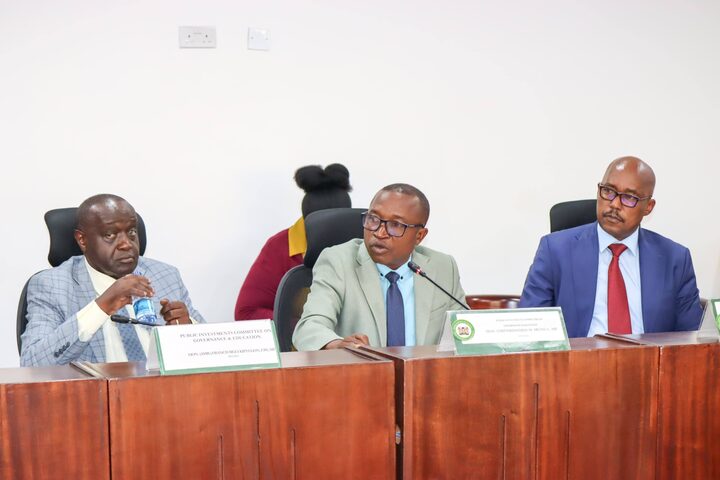
Members of the Public Investments Committee on Governance and Education have uncovered serious governance failures, financial mismanagement, and inclusivity concerns in several technical and vocational education and training (TVET) institutions across the country. In a statement shared on Parliament’s Facebook page on Friday, January 30, 2026, the Committee revealed that these findings emerged after reviewing Auditor-General reports covering various institutions.
The MPs made it clear that their main goal was to protect public funds and improve service delivery in the education sector.
Committee Chairperson Wanami Wamboka emphasized their commitment to safeguarding public resources while ensuring that the education system delivers quality services.
“We are devoted to ensuring public resources are safeguarded and service delivery in the education sector is top-notch,” said Wamboka.
At Kisiwa Technical Training Institute, serious concerns were raised over unresolved land ownership issues. Management failed to provide necessary documents for one parcel of land, leaving questions about the institution’s property dealings.

Photo Courtesy:
Furthermore, the staffing structure was criticized for lacking diversity, with 86 percent of employees coming from a single ethnic group.
The Committee deemed this imbalance unacceptable for a national institution and instructed the management to ensure that the workforce reflects Kenya’s national character within two years.
Financial mismanagement was also identified, particularly with the unutilized Higher Education Loans Board (HELB) loans and bursaries amounting to Ksh22 million.
These funds were reportedly received late, after students had already paid their fees. The Committee ordered that this money be refunded so that other students can benefit and pushed for policy changes to ensure quicker reallocation of such funds.
At Nairobi National Polytechnic, the Committee dealt with complaints from students who were sitting exams despite having outstanding fee balances.
Although management claimed that the practice had ceased, MPs insisted that the policy be strictly enforced to prevent future financial issues.
PC Kinyanjui Technical Training Institute, on the other hand, reported debts exceeding Ksh45 million due to unpaid fees and delayed remittances.
The Committee decided to engage with the Executive to push for policies that would require institutions to admit students even if they have not yet paid their fees, recognizing the strain this situation places on service delivery.
The Committee also addressed a land dispute involving a 25-acre parcel at PC Kinyanjui and announced plans to engage church leaders to resolve the issue.
They also directed management to employ a person with disabilities, as required by law. Kabete National Polytechnic was praised for adhering to legal and regulatory standards, which set a positive example for other institutions.
However, Thika Technical Training Institute faced intense scrutiny for Ksh5 million losses in its catering department.
MPs rejected management’s explanation and ordered an inspection of the site, covering the last three years. The Committee also questioned the underutilization of 46 acres of land that could have been used for agriculture and expanded the audit inquiry following an irregular recruitment of an independent German language tutor.
Michuki National Polytechnic received a warning for failing to provide necessary documents to auditors, while Mathenge and Nkabune Technical Training Institutes were directed to address ethnic imbalances within two years. Nkabune, however, was commended for its overall good governance practices.
The Committee concluded by reinforcing its commitment to strengthening accountability, inclusivity, and value for money in the education sector, ensuring that the public benefits from these reforms in the long run.