
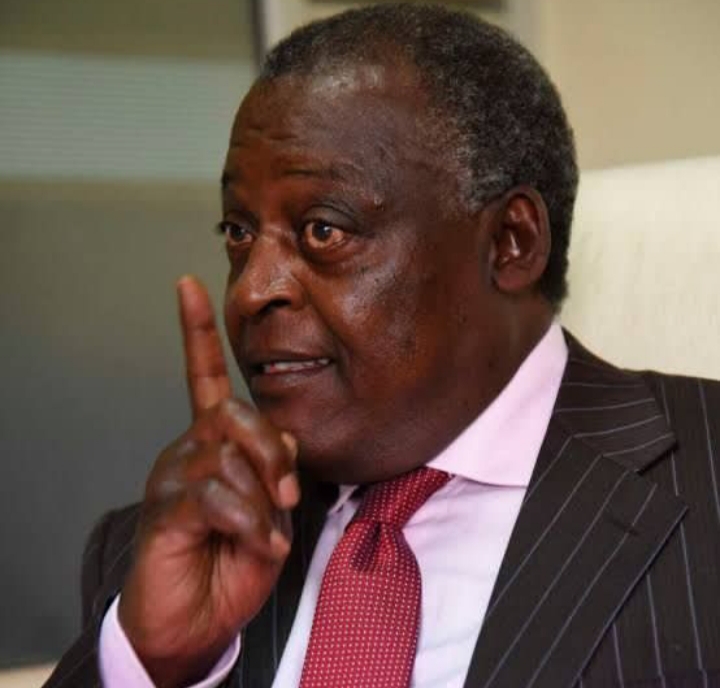
According to findings by Nation Africa, the long-running land and debt disputes linked to the late Cyrus Shakhalaga Jirongo reveal a complex trail of power, influence, and risky deals that followed him almost to his final days.
His death in a road crash along the Nairobi–Naivasha highway came at a time when several court battles and financial obligations tied to public land were still unresolved.
The story goes back to June 2010, when the Registrar of Titles published a gazette notice revoking ownership of a 1,000-acre piece of land in Ruai that was registered to Offshore Trading Company. The company was linked to Mr Jirongo, who moved to court to stop the revocation. Records show that the land had been acquired in 1993 under unclear circumstances, then used as security for a Sh1.1 billion loan from Postbank Credit Ltd. The lender later collapsed due to irregular lending, much of it connected to politically powerful individuals.
By the time of Mr Jirongo’s death, the loan had not been repaid. Court documents indicated that the interest had grown the debt to more than Sh19.8 billion. There were also questions about a second loan from the same lender, whose interest reportedly rose past Sh20 billion, though it was not clear if it had been settled.
Known as a gifted speaker with a confident charm, Mr Jirongo often relied on persuasion and negotiation, keeping court action as a backup. This approach led to an out-of-court settlement that allowed him to keep the Ruai land.
In return, he was supposed to surrender another parcel in Nyayo Embakasi to the Ministry of Lands and withdraw his case. While he withdrew the suit and retained the Ruai property, the Embakasi land was later sold to third parties, leaving the government at a loss.
In January 2025, High Court judge Oscar Angote dismissed a third case Mr Jirongo had filed over the Ruai land. The judge ruled that out-of-court agreements could not override the Constitution, rejecting claims that earlier settlements protected his ownership.
Earlier, Mr Jirongo had sued the Kenya Deposit Insurance Corporation, which was trying to auction the land to recover the unpaid loan after taking over Postbank Credit as liquidator.
The Ruai land had originally been set aside for the expansion of a Nairobi Water and Sewerage Company treatment plant. Despite this, a title deed was issued to Offshore Trading Company, and the land was quickly charged for loans. Another Sh1.65 billion loan followed, secured using public land, and it also remained unpaid.
In 2022, the Ethics and Anti-Corruption Commission flagged suspicious payments involving Mr Jirongo. One case involved Nairobi County paying him Sh250 million for land in Mukuru kwa Reuben that already hosted a public school, clinic, and police station.
Although the land had been in public use for decades, a title deed was later linked to Mr Jirongo’s company and used as loan security.
Even as debts piled up, Mr Jirongo continued to juggle obligations, paying some creditors with funds from new deals. Friends and associates described him as generous and fond of a lavish lifestyle. Others said he simply mastered the art of borrowing from one source to settle another.
With his passing, many questions about unpaid debts and disputed land remain unanswered.
His life, marked by bold deals at the intersection of politics and business, has secured him a place in Kenya’s modern history as a figure whose story often felt stranger than fiction.