
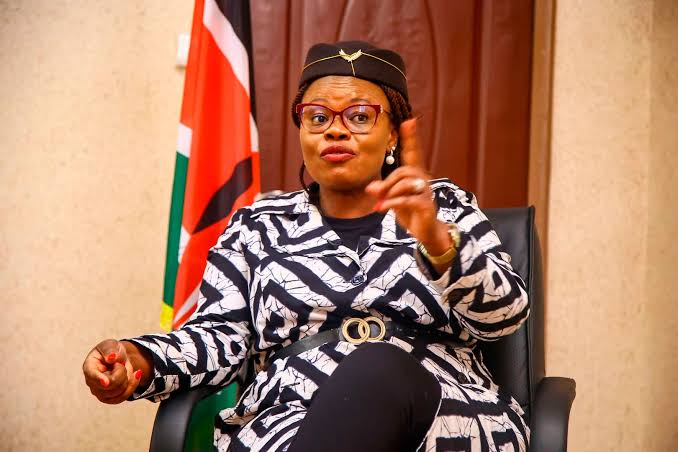
Githunguri Member of Parliament Gathoni Wamuchomba has come under heavy public scrutiny after removing photos that showed her in the company of former Mungiki leader Maina Njenga.
The images were taken down following strong criticism from Kenyans on social media, many of whom questioned her decision to openly associate with a figure linked to one of the country’s most painful periods.
The issue began when Wamuchomba shared photos on her X account showing her meeting Njenga. Alongside the images, she posted a short message saying that she had met him and was passing his greetings to Kenyans.
What may have seemed like a simple update quickly turned into a major online debate. Within a short time, the post attracted wide attention, with many users expressing shock and disappointment.
A large number of commentators argued that the MP had shown poor judgment. They pointed out that Wamuchomba has built a public image as a strong voice on accountability, justice, and good governance.
For these critics, appearing friendly with a person whose past is tied to violence and fear appeared to contradict the values she often speaks about in public forums. Some went further to say that leaders should be more sensitive to the memories and wounds many Kenyans still carry.
Others viewed the meeting as politically driven. They suggested that the interaction may have been part of wider political calculations rather than a genuine attempt at engagement or reconciliation.

Courtesy File: TNX/Nation Africa
This view fueled more anger, with critics saying that politics should never come at the cost of ignoring history or dismissing the suffering of victims.
As the criticism intensified, Wamuchomba deleted the post from her X account. However, by that time, screenshots had already spread widely. The images continued to circulate on different platforms, keeping the discussion alive.
On Facebook, where the photos were still visible for a short period, even more people joined the conversation.
Many users shared personal stories or memories connected to the Mungiki era.
Some spoke about fear, extortion, and violence that affected families and communities, especially in Nairobi, Central Kenya, and parts of the Rift Valley. For these individuals, seeing a sitting MP appear comfortable with a former Mungiki leader was deeply upsetting.
Several Kenyans questioned why public leaders continue to associate with individuals linked to dark chapters in the country’s history without clear explanations or accountability.
They argued that leadership comes with responsibility, including being mindful of public pain and collective memory.
Others warned that such actions could have political consequences, including loss of trust and support from voters.