
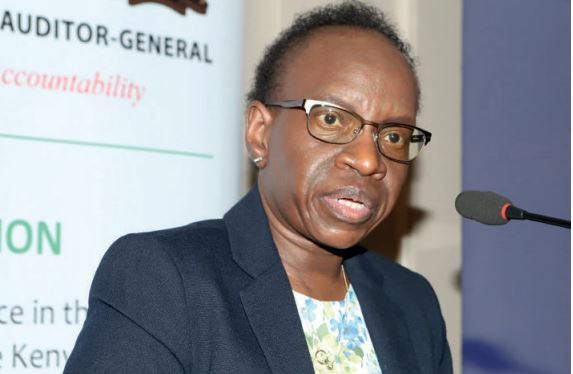
Problems in the distribution of school capitation funds have been exposed after a detailed review showed serious gaps in student enrolment records and financial management.
The Office of the Auditor General reported that differences between data in the National Education Management Information System and actual school registers caused some schools to receive more money than they deserved, while others received less over a four-year period ending June 2025.
According to the audit, enrolment mismatches led to overfunding in 354 secondary schools, 99 Junior Secondary Schools (JSS), and 270 primary schools, amounting to Sh3.7 billion.
At the same time, 334 secondary schools, 244 JSS, and 230 primary schools were underfunded by Sh2.14 billion. This shows that the system used to guide capitation payments is not reliable and has created unequal access to government support.
The report also found cases where schools failed to follow financial rules. Some schools mixed tuition and operations funds in the same bank accounts instead of keeping them separate as required.
Three secondary schools were named for repeatedly using one account for both types of funds over several financial years. The audit stated that mixing funds reduces transparency and makes it hard to track how money is spent.
In addition, several schools withdrew cash or transferred money from tuition accounts in ways that go against guidelines from the State Department for Basic Education. Nearly 300 secondary schools delayed moving maintenance and improvement funds from operations accounts to infrastructure accounts. These delays ranged from a few weeks to more than two years, affecting school projects and proper planning.
Serious weaknesses were also found in the management of NEMIS itself. The audit showed differences between NEMIS data and records held by the Teachers Service Commission, the Kenya National Examinations Council, and the Kenya Primary School Education Assessment.
Because of these inconsistencies, some schools received capitation funds even though they were not listed in other official databases. In other cases, schools that had already closed continued to get money.
The special audit reviewed 438 secondary schools, 244 JSS, and 357 primary schools.
The findings point to weak controls, poor data coordination, and failure to follow financial rules. Without fixing these issues, the risk of losing public money and denying deserving schools their rightful support will remain high.