
Political discussions in Kenya are slowly turning toward the next general election, even though it is still some time away. Within government circles, attention is increasingly being placed on how key institutions will be shaped ahead of 2027. One area drawing quiet but serious interest is the country’s security leadership, which plays a major role during election periods.
Reports circulating in political and security spaces suggest that President William Ruto may be considering changes at the very top of the security command. The names most frequently mentioned are Inspector General of Police Douglas Kanja and Director of Criminal Investigations Mohamed Amin. While no official announcement has been made, the conversations alone signal that the presidency is thinking carefully about the road ahead.
Such moves, if they happen, would not be unusual in Kenyan politics. As elections approach, sitting governments often reassess whether the current leadership of sensitive institutions still fits their plans.

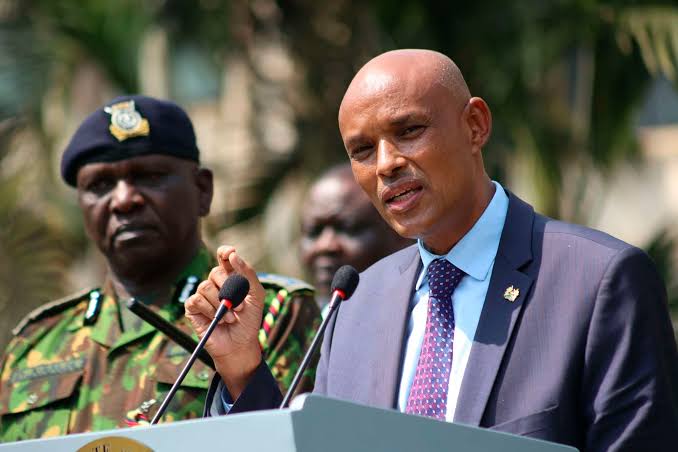
Screen grab photo: Courtesy NTV.
Security agencies are especially important because they are responsible for maintaining public order, enforcing the law, and ensuring that political competition does not descend into violence.
Douglas Kanja assumed office at a time when public trust in the police was under close examination. His tenure has involved managing protests, political tensions, and rising public expectations for accountability within the force. Mohamed Amin, on the other hand, has built a reputation as an experienced investigator who prefers a direct and hands-on style at the Directorate of Criminal Investigations. Together, they have been key figures in the administration’s approach to security.
However, as the election season gets closer, the demands on these offices are expected to grow. The government will want to avoid any uncertainty or internal friction within the security services. This is why talk of change is being interpreted by some analysts as a strategic decision rather than a criticism of individual performance.

An outdated photo of Inspector General of Police Douglas Kanja and DCI boss Mohamed Amin. Photo Courtesy: The Standard
Supporters of a possible shake-up argue that new leadership could bring fresh ideas and renewed energy at a critical time. They say a different approach may be needed to deal with evolving security challenges, including political unrest, crime, and the need for neutrality during campaigns. Others, however, caution that frequent changes can disrupt continuity and weaken institutional stability.
Public opinion on the matter remains divided. Some Kenyans view leadership changes as a normal part of governance, especially when done in line with the law and professional standards. Others worry that such moves could be influenced by politics rather than merit, which could affect how security agencies are perceived by the public.
What remains certain is that any changes at the National Police Service or the DCI will have a wide impact. These institutions are central to daily life and national confidence, especially during politically sensitive periods.
The true test will not be who occupies these offices, but whether the security sector remains professional, impartial, and focused on serving the people as Kenya moves toward another important election.