
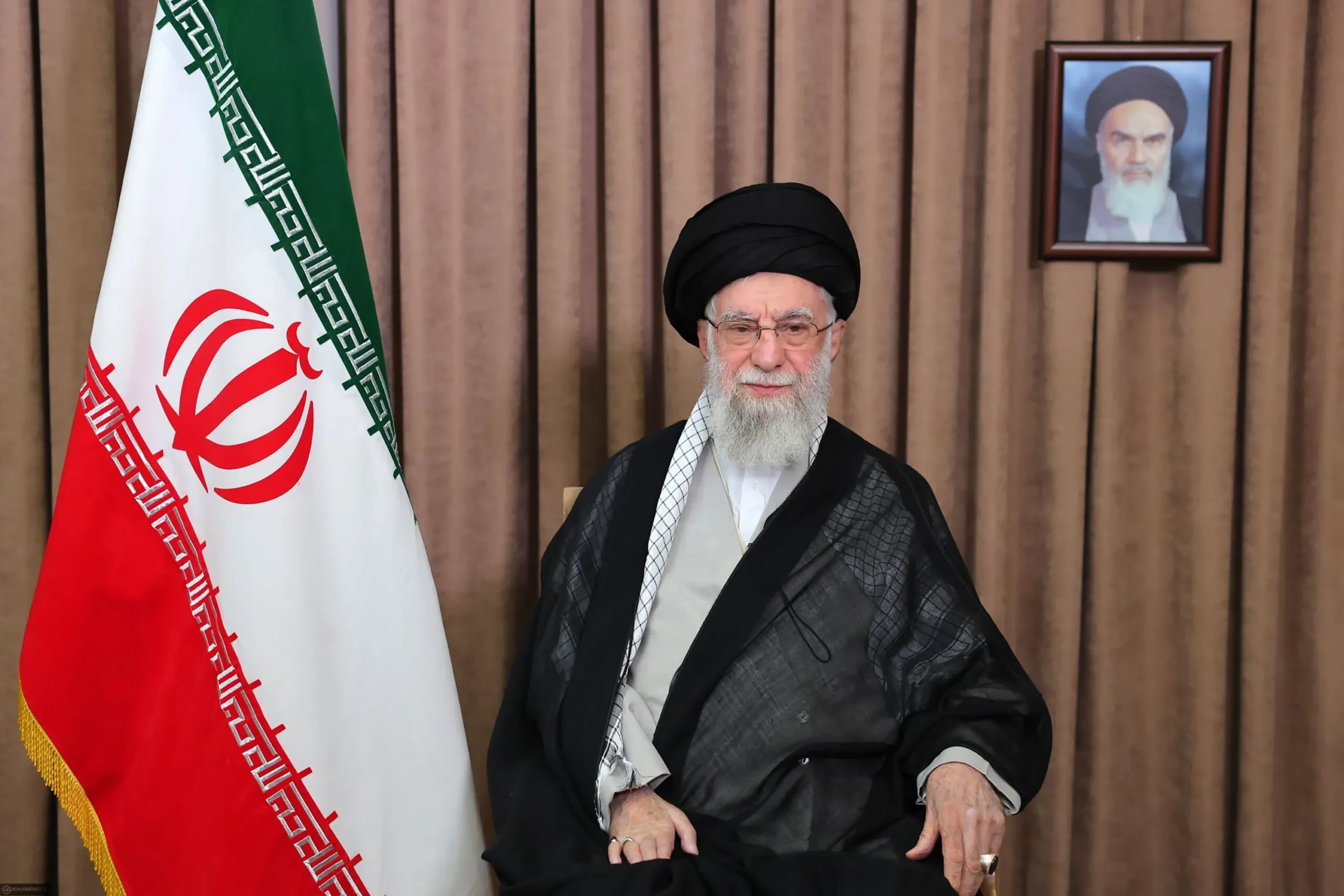
Iran has officially announced the death of Ali Khamenei, ending hours of uncertainty and speculation that followed intense airstrikes in Tehran.
Iranian state television confirmed on March 1, 2026, that the country’s Supreme Leader died during attacks linked to the escalating conflict involving Iran, the United States and Israel. The confirmation came after a wave of conflicting reports about his condition and whereabouts.
A news presenter on state TV struggled to hold back tears while delivering the announcement. The broadcast declared that Iran would observe 40 days of national mourning.
Before that emotional address, a formal statement from the Supreme National Security Council was read out, officially confirming the leader’s death and accusing the United States and Israel of responsibility. The council described his death as “martyrdom” and said it would mark the start of what it called a new uprising against oppression.
Khamenei had led Iran since 1989 and was the longest-serving head of state in the Middle East. He rose to power after the death of Ruhollah Khomeini, who had led the 1979 revolution that removed Mohammad Reza Pahlavi from power.
Before becoming Supreme Leader, Khamenei served as Iran’s president from 1981 to 1989, guiding the country during the difficult years of the Iran-Iraq War.
Over the decades, he strengthened his control over Iran’s political system and security institutions, including the powerful Revolutionary Guard. His leadership was marked by firm opposition to the United States and Israel and repeated crackdowns on internal dissent.
Following the confirmation of his death, his official communication channel shared a Quran verse alongside his photograph. The post described faith, sacrifice and loyalty, reflecting how the state wanted the moment to be remembered. Earlier reports from Iranian media outlets, including Fars News Agency, claimed that some of his family members were also killed in the same attacks, though details remain limited.
In Washington, Donald Trump publicly declared that the Iranian leader had been killed, even before Tehran’s confirmation. He described the operation as a joint effort between the United States and Israel and called it justice for victims he blamed on Iran’s leadership.
Trump said advanced intelligence systems ensured that Khamenei could not escape and added that some Iranian security forces were already seeking immunity. He also warned that military operations would continue.
Before Iran’s official statement, reports about Khamenei’s fate were sharply divided. Israeli officials had claimed he was dead, and some media outlets reported that footage had been shown to Israeli leaders. At the same time, Iranian authorities dismissed those claims as psychological warfare. Foreign Minister Abbas Araghchi had earlier said that, to his knowledge, the Supreme Leader was alive. Semi-official news agencies also insisted he remained in control.
Those denials have now been overtaken by the state’s confirmation. Khamenei’s death marks a major turning point for Iran and the wider region. What follows next for the country’s leadership and its role in the ongoing conflict remains uncertain, but the announcement has already reshaped the political sphere in Tehran and beyond.